
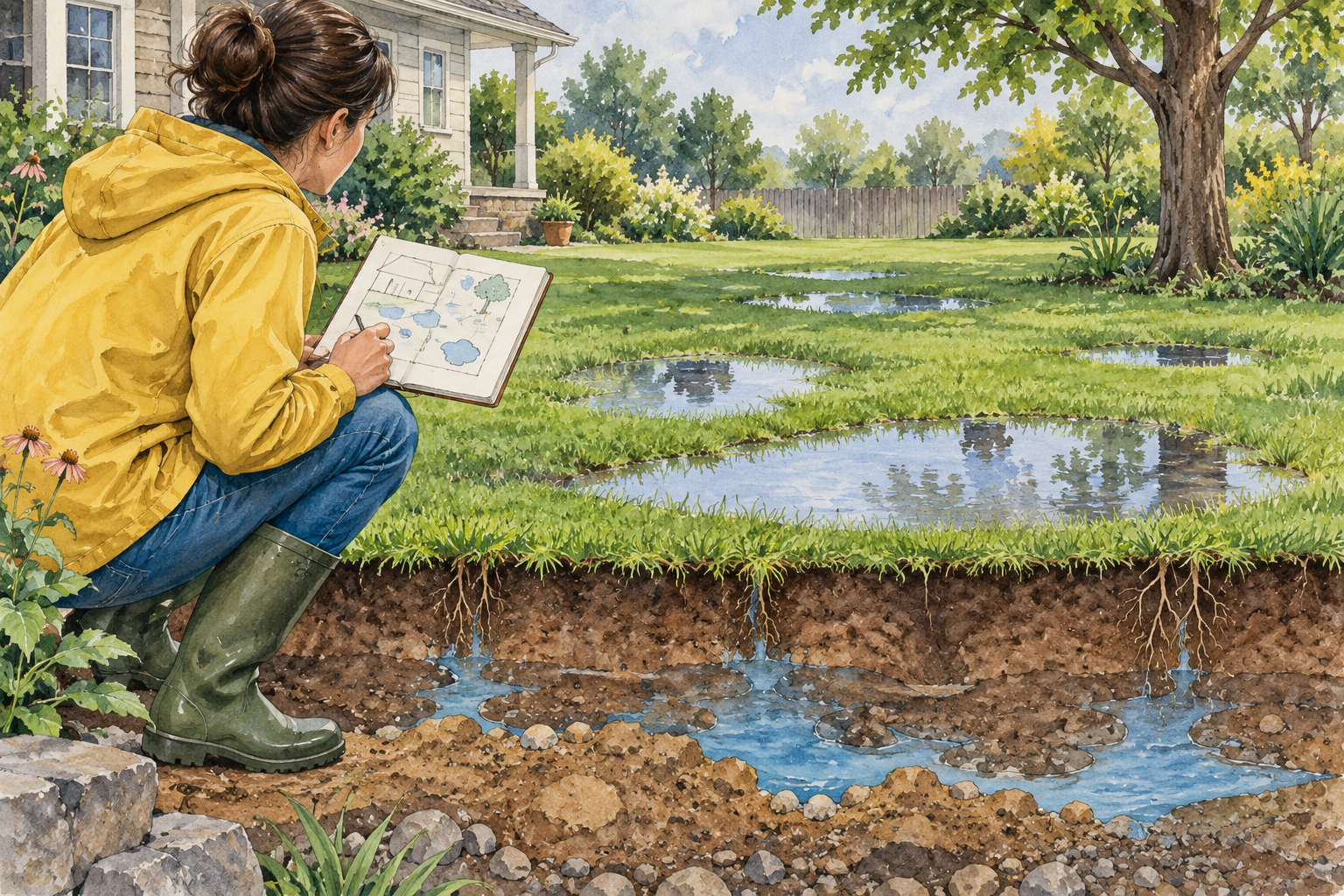
When moss appears in a lawn, record the conditions around it before choosing a treatment. A close-up photograph identifies the patch you noticed; it does not explain whether shade, drainage or another condition is contributing. The useful first step is an observation record and a focused question.
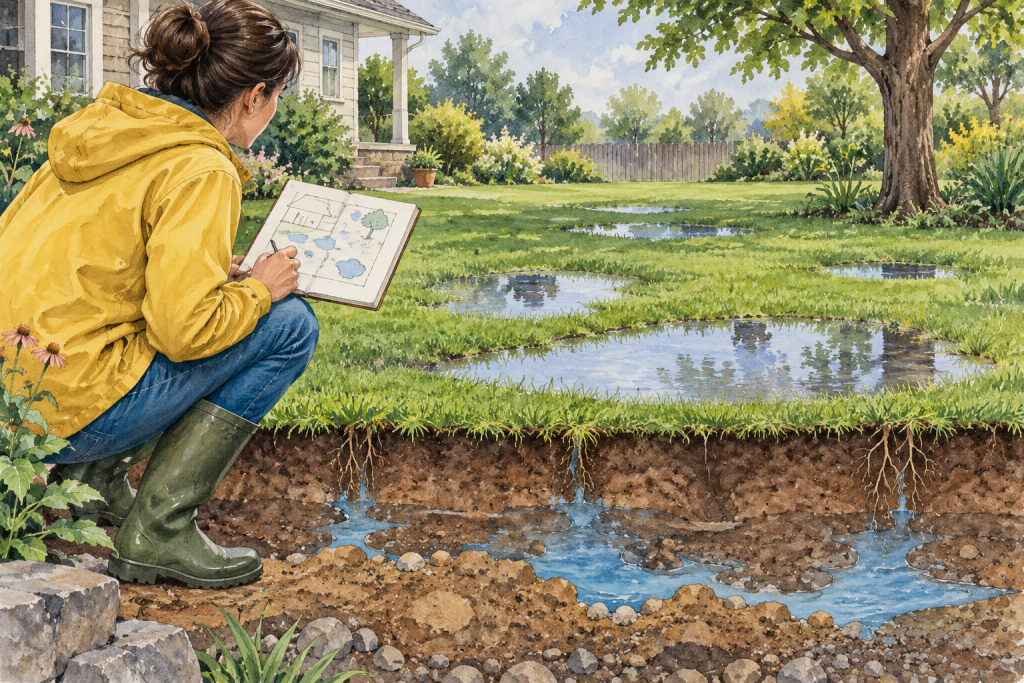
WSU Extension’s lawn guidance connects moss with site conditions including shade, drainage and soil conditions. It provides background for a conversation, not a diagnosis of your property. Do not select lime, fertilizer or a pesticide solely because moss is visible.
Make three observations without disturbing the site
From an ordinary safe viewing position, note where moss grows, where water remains after rain, and which areas receive shade. Date the notes and distinguish a repeated observation from something seen once. Keep any known irrigation changes or maintenance history beside the sketch.
| Area | What you saw | Question |
|---|---|---|
| Shaded edge | Record shade and visible turf condition. | Does the intended lawn use fit these conditions? |
| Wet patch | Record the location and observation time. | What site evaluation is needed before treatment? |
| Different area | Use a comparison area in the same yard. | What conditions differ? |
Ask for the first appropriate check
Bring the record to an appropriate Extension resource or landscape professional and ask what should be checked first. Soil testing, maintenance changes and drainage evaluation answer different questions; none should be assumed from the photograph alone. Avoid changing drainage routes or excavating to investigate an uncertain condition yourself.
In a hypothetical yard, a shaded wet strip and a sunny worn path should not automatically receive the same treatment. A useful plan identifies the question, responsible reviewer and next step. No product, chemical rate or guaranteed lawn outcome is recommended here.
Garden of Success explains why a wet area also needs suitability screening before a rain garden is proposed. Plan a Rain Garden Location Before Choosing Plants.