
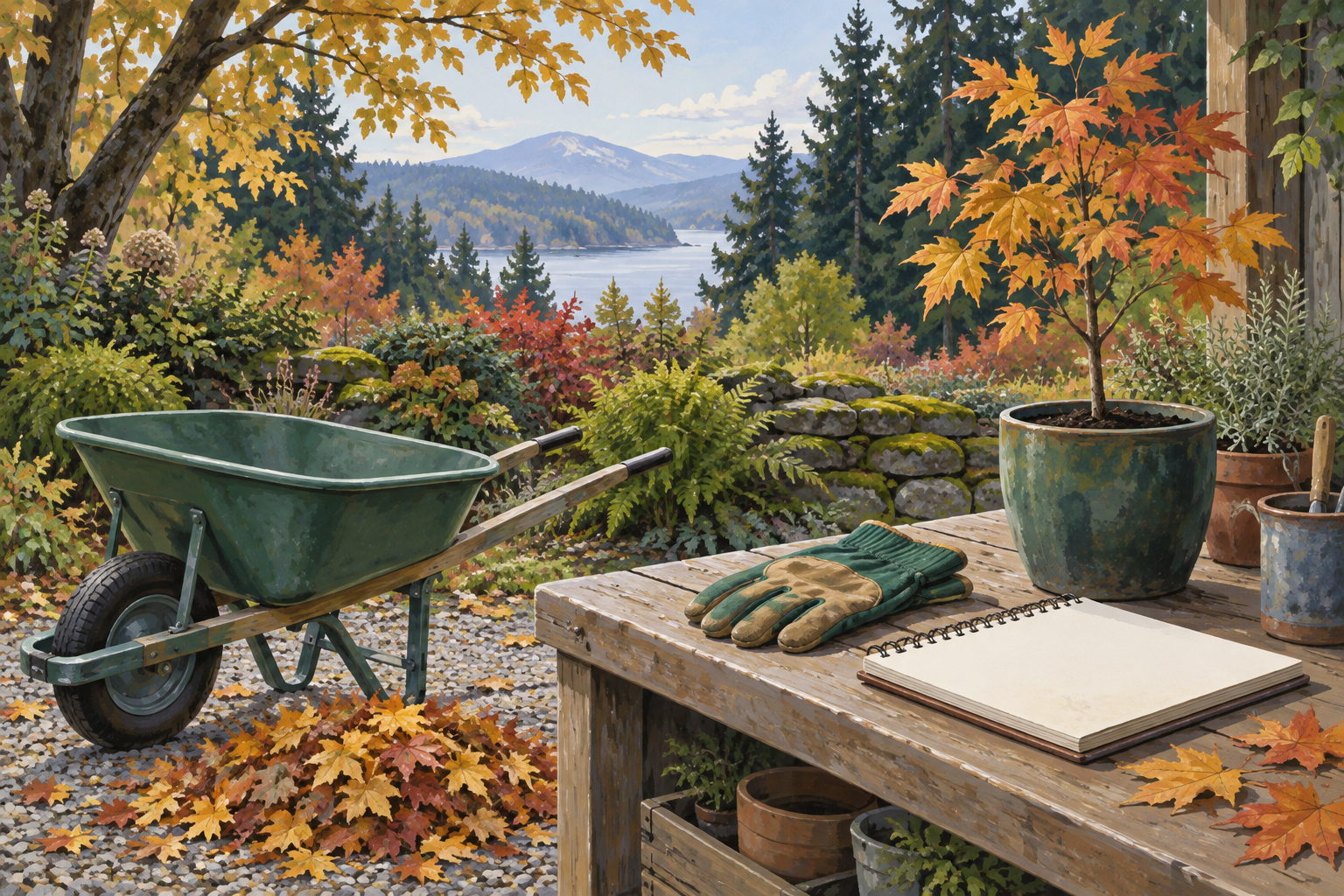
Fall leaves are useful in the right place. Shredded into a garden bed or managed in a compost pile, they can become mulch or soil-building material. Left in a roadway, ditch, or storm drain, however, the same leaves can obstruct runoff and travel toward local waterways.
A good Kitsap fall leaf cleanup does not require removing every leaf from the property. The practical goal is to clear the places where leaves create drainage problems, then put the material to work—or dispose of it correctly.
Why leaves and storm drains do not mix
Kitsap County Public Works explains that storm drains collect water and move it downstream. When a grate becomes covered with leaves, garbage, or other debris, the blockage can restrict flow and contribute to localized flooding. Stormwater can also carry yard waste and other pollutants into streams, lakes, wetlands, and shorelines without the filtering that soil and plants provide.
Leaves are organic, but that does not make a storm drain an appropriate disposal route. Excess leaf litter entering water adds organic matter and nutrients. As organic material decomposes, it can consume oxygen in the water. The simplest prevention step is to keep leaves on the landscape or in an approved waste stream rather than allowing them to collect on pavement.
Start with a drain-first cleanup route
Instead of beginning in the middle of the lawn, walk the route rainwater follows across the property. Work through these areas in order:
- Storm drain approaches: Remove loose leaves from the pavement uphill of a drain before rain carries them to the grate.
- Driveways and walkways: Sweep or rake leaves onto the property, not into the street.
- Roadside edges and ditches: Do not blow or dump leaves into these drainage routes.
- Gutters and downspout outlets: Check for leaves, needles, and debris that may restrict roof drainage.
- Low spots near buildings: Clear obvious flow paths while avoiding changes that redirect water toward a neighboring property.
If a nearby grate can be reached safely from outside the roadway, loose surface debris may be moved away with a rake. Kitsap County warns residents never to remove a storm drain lid, climb into a drain, or attempt to clear a drain in a busy street. Flooding or drainage problems in the public stormwater system can be reported through Kitsap1 at 360-337-5777 or help@kitsap1.com.
Choose a destination for each pile
Once leaves are away from drains and pavement, choose among four options based on their condition and the space available.
1. Mulch suitable leaves
Dry, relatively clean leaves can be chopped with a mower or shredder and spread around established plants. WSU Extension recommends chopping or shredding leaves for better mulch and avoiding tightly packed, wet material that restricts air movement. Keep mulch from resting directly against plant stems or tree trunks.
A light layer of finely chopped leaves may also break down on a lawn. Do not leave a dense, wet mat over the grass. If you are deciding which parts of the yard should be cleared and which can retain leaf cover, see this Kitsap guide to removing or leaving fall leaves.
2. Compost clean leaves at home
Deciduous leaves are useful compost ingredients. WSU Extension identifies them as a relatively balanced raw material, while dry leaves can also help add structure to wetter materials such as fresh grass and garden trimmings.
Shredding leaves speeds decomposition. Keep the pile moist but not waterlogged and mix or turn it when it becomes compacted. In Kitsap’s rainy season, covering the top can help prevent excessive saturation while leaving room for airflow. Slow composting is also an option, but it will not reliably destroy weed seeds or plant pathogens.
3. Use curbside food and yard waste service
Kitsap County says curbside compost collection is available to residents, but households should contact the provider serving their address for subscription details and collection instructions. Do not assume neighbors in another city or an unincorporated area have the same provider or schedule.
The County’s current curbside compost guidance accepts leaves, grass, plant trimmings, and qualifying branches. It excludes plastic bags, dirt, rocks, pet waste, and noxious weeds. Check the current guide before filling the cart, especially when dealing with bagged material, large branches, or invasive plants.
4. Verify a drop-off destination
Residents and businesses may take clean yard waste to private yard-waste recyclers listed by Kitsap County. Before loading a vehicle, confirm that the destination currently accepts the specific material, whether bags must be emptied, and what hours and fees apply. Facility details can change, and not every garbage or recycling site accepts yard debris.
Kitsap County also states that tossing leaves or other yard debris onto roadsides, public land, neighboring property, ravines, ditches, creeks, or lakes is illegal dumping. Authorized choices include home composting, curbside collection, and permitted waste facilities.
A manageable fall routine
During heavy leaf fall, a short cleanup before forecast rain is often more useful than waiting for one large end-of-season job. Clear pavement and drainage routes first, separate clean leaves from litter, and immediately move each pile to its planned destination. Repeat the route after windy weather and after trees drop another layer.
Next step: Walk your property’s runoff path today, clear leaves from safe-to-reach drain approaches, and use Kitsap County’s current compost and waste guidance to verify where the collected material belongs.
Previously generated AI editorial illustration reused from the Kitsap Landscape media library; it does not document a specific event, current condition, product, client, or result described in this article.