
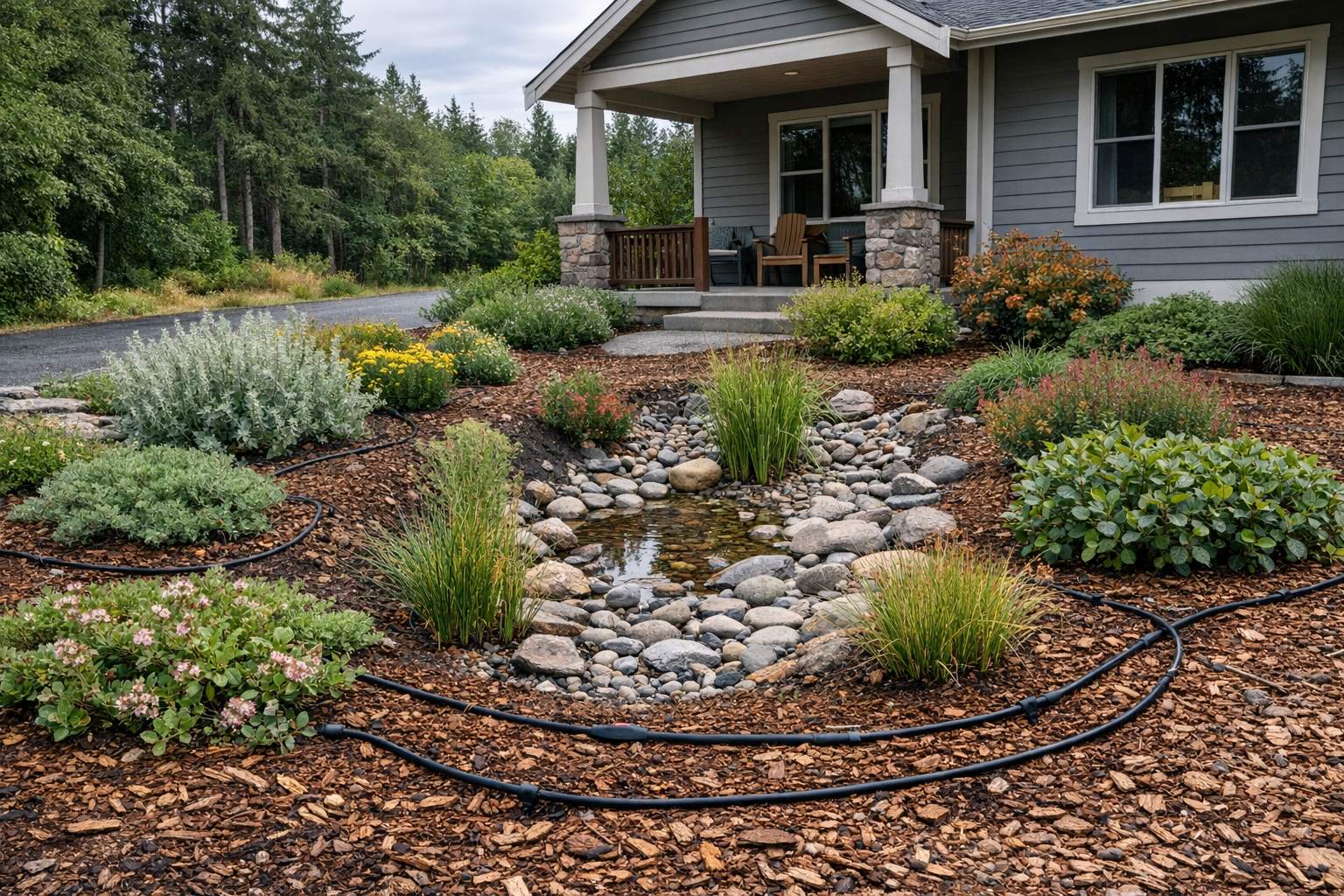
A delivery described simply as “mulch” leaves several decisions unanswered. Are you covering bare soil beneath established shrubs, refreshing an ornamental bed, improving a path or planning a soil-amendment project? Begin with the job. Wood chips, bark and compost should not be treated as interchangeable materials just because all can appear in a landscape estimate.
Describe the area before choosing the product
Make a simple sketch showing the planting beds, paths, nearby structures and delivery access. Note the plants you want to retain, visible weeds, existing surface material and any slope or drainage questions. These observations help a qualified landscape professional ask better questions; they are not a diagnosis of the soil or a prescription for a universal application depth.
WSU Extension’s arborist wood-chip reference and Washington Ecology’s compost guide are useful starting points for understanding the different jobs these materials can do. Use the relevant guidance with the actual product and planting conditions, not as proof that every load has the same properties.
Ask the supplier what is in the load
- What material is being supplied, and what is its source?
- How consistent is the size and composition?
- What product information or quality documentation is available?
- Is the material appropriate for the intended planting area and use?
- What quantity is included, and how is it measured?
- Where may the delivery be placed without blocking access or affecting drainage?
Separate material delivery from installation
A delivered load is not the same service as a prepared and finished bed. Ask whether the quote includes weeding, removal of existing material, edging, spreading and cleanup. Have the installer explain the proposed treatment around plant stems, trunks, irrigation components and hard surfaces. Avoid a blanket instruction to pile the same amount everywhere.
Keep appearance in perspective
Color matters to the finished garden, but it cannot tell you whether the material suits the plants, slope or intended use. Compare samples and written descriptions, then confirm what will actually be delivered. Keep the estimate and product details so that a later refresh can be based on what was installed, not just a photograph of how it looked on the first day.
Reused editorial image from the Kitsap Landscape library; not a tested material comparison or this reader’s yard.